Atkinson Plaza
475 Atkinson Drive #1006, Honolulu, HI 96814
Private Capital Memo
475 ATKINSON DRIVE #1006
Honolulu, Hawaii
Confidential Investment Memorandum
PART 1 — DEAL OVERVIEW + PROPERTY HIGHLIGHTS
The Opportunity
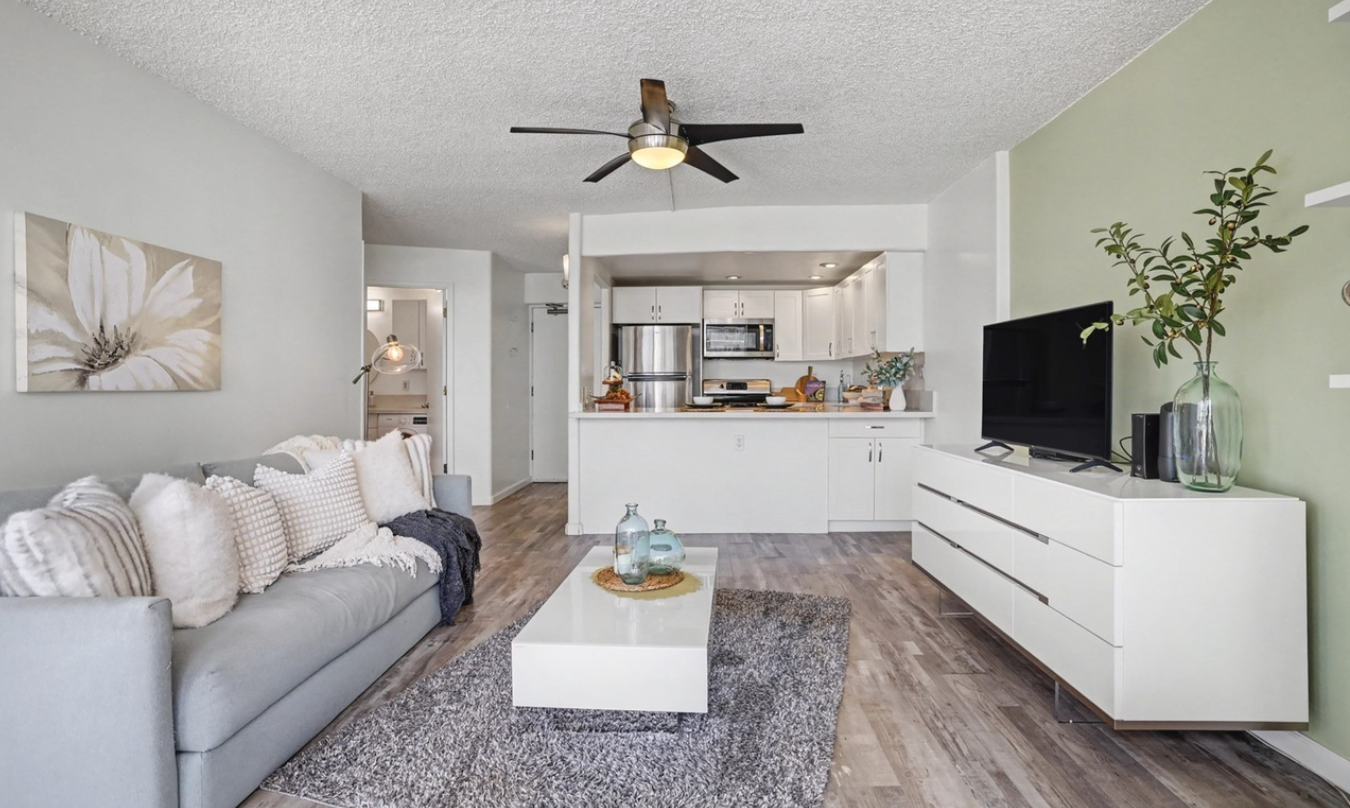
This is a turnkey, income-ready condominium in one of Honolulu’s most strategically positioned corridors — directly across the street from Ala Moana Center and one block from Waikiki, accessible by foot over the bridge in either direction. The unit requires zero renovation, zero furnishing budget, and zero preparation time before generating rental income.
The seller listed at $388,000 in March 2026. After four price reductions over 212 days, the property is now offered at $288,000. We are entering at $278,000 — a $110,000 reduction from original list price — with a motivated seller who has demonstrated consistent willingness to negotiate. This is a premium asset at a distressed price point, not a distressed asset.
The Property
475 Atkinson Drive, Unit #1006 Honolulu, Hawaii
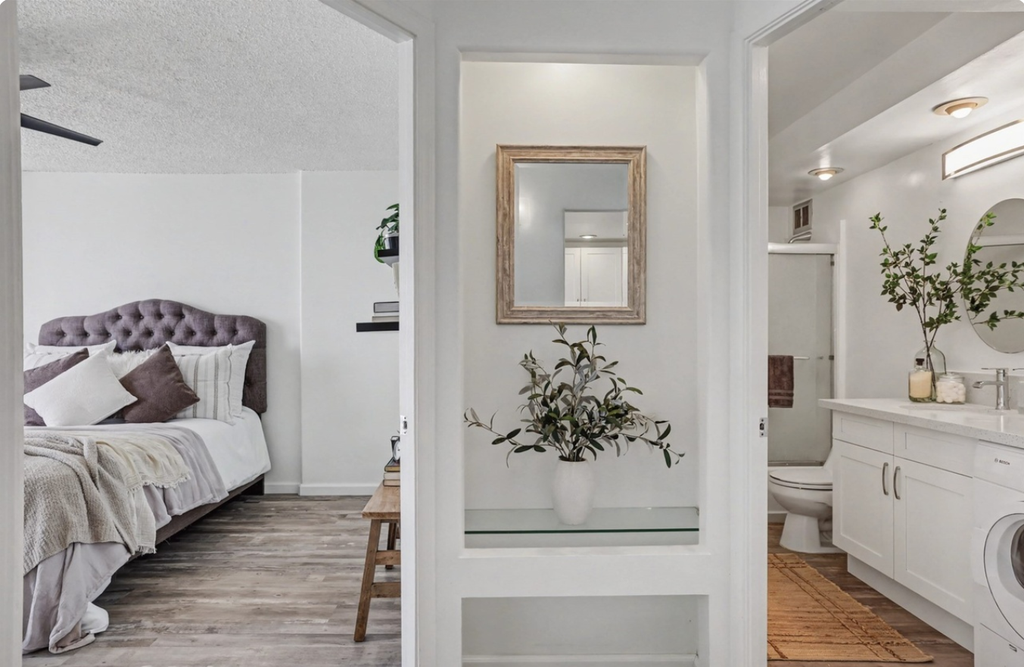
- Type: Condominium, 1 Bedroom / 1 Bathroom
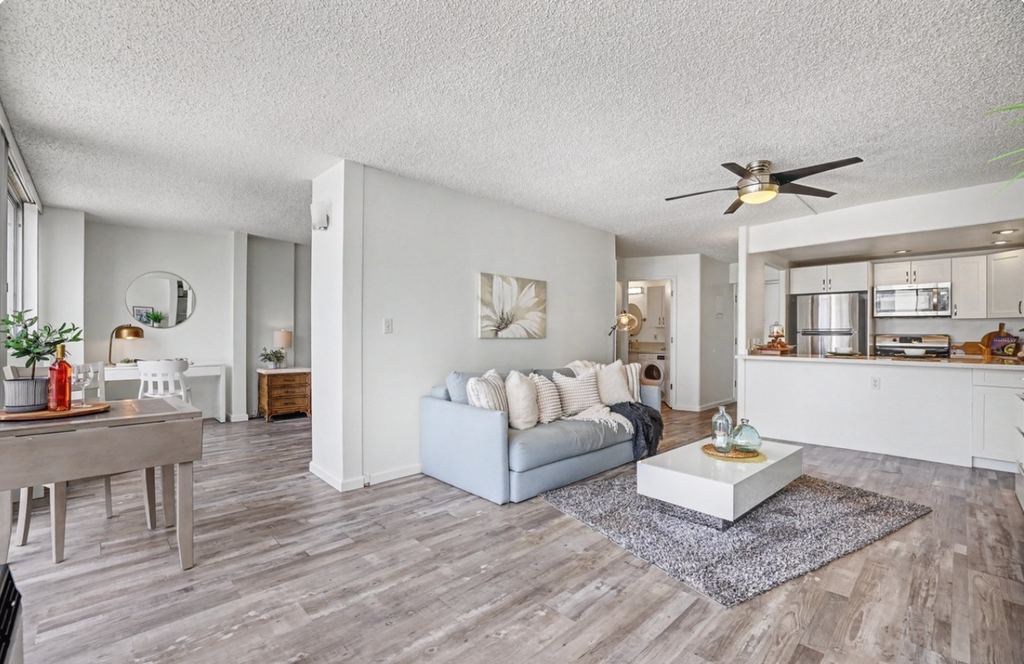
- Condition: Turnkey. Fully updated. Move-in ready.
- Parking: 2 assigned stalls (significant premium differentiator in this corridor)
- Laundry: In-unit washer and dryer (Bosch)
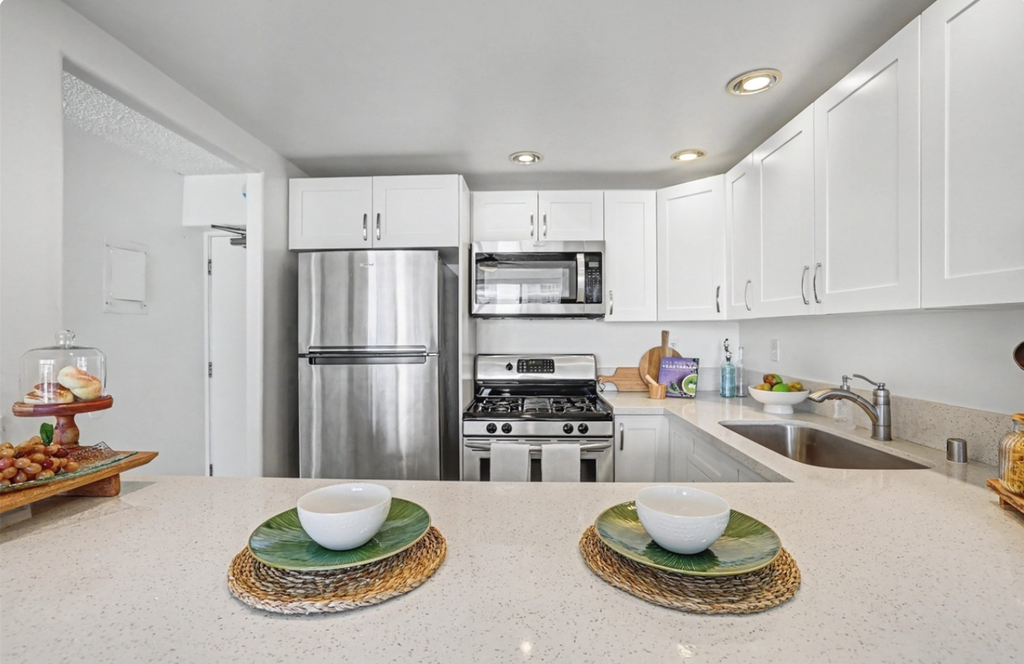
- Kitchen: Updated with quartz countertops, stainless steel appliances, gas range
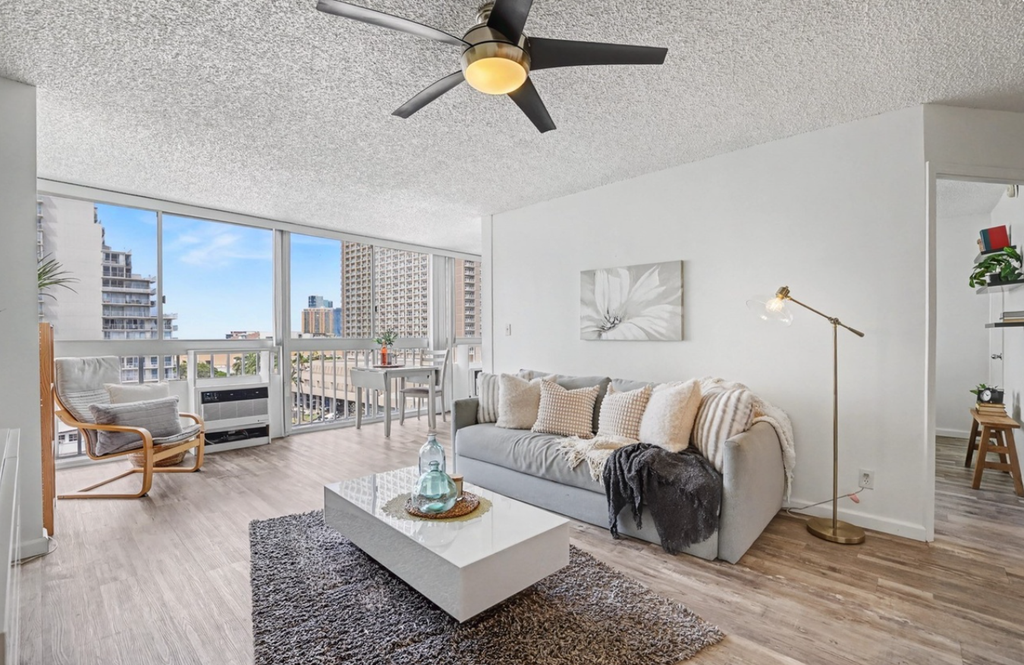
- Flooring: Luxury vinyl plank throughout
- Views: City views from bedroom and living area
- Outdoor Access: Private balcony
Building Amenities:
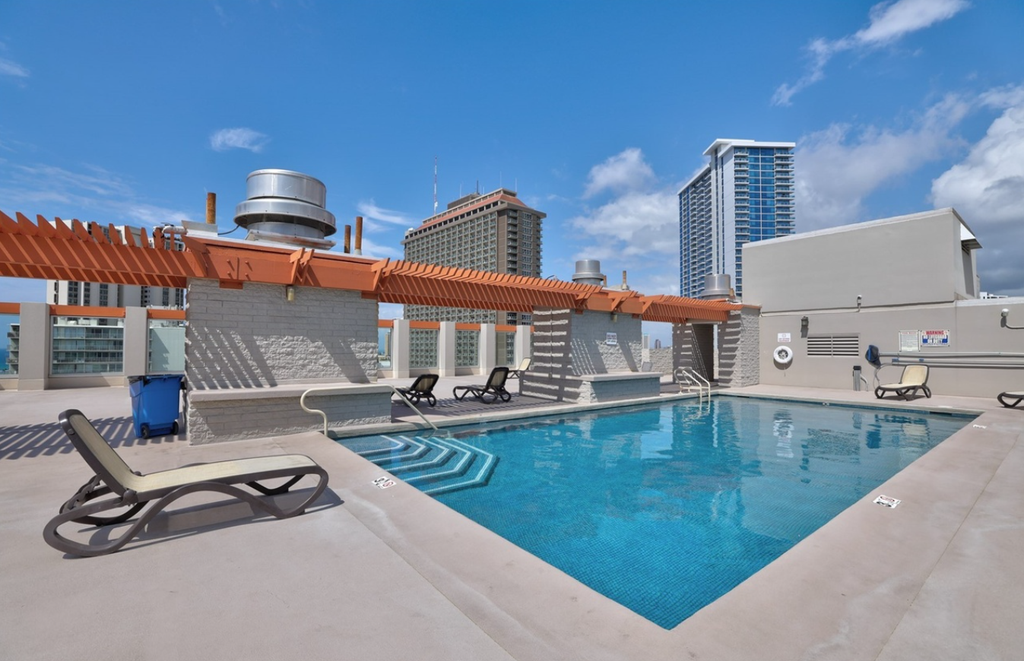
- Rooftop pool with panoramic views of Waikiki, the Pacific Ocean, and the Ko’olau Mountains
- BBQ area
- Sauna
- Tennis court
These amenities are not incidental. They are active selling points for the target tenant profile and justify the premium rent positioning.
Location
475 Atkinson Drive sits at the precise intersection of two of Honolulu’s highest-employment, highest-foot-traffic destinations.
Ala Moana: Directly across the street. Home to Ala Moana Center — Hawaii’s largest shopping complex and one of the highest-grossing retail destinations in the United States. Major luxury employers including Hermes, Harry Winston, Louis Vuitton, Chanel, and Gucci. operate flagship locations here, alongside anchor tenants, restaurants, and professional office space.
Waikiki: One block away, accessible on foot over the bridge in either direction. Hawaii’s premier hospitality, tourism, and luxury retail corridor. Home to luxury hotel brands, high-end restaurants, and significant professional employment.
The commute story for our target tenant: Zero cars required to reach work. Zero traffic. Zero parking stress at the office. And when they come home, two assigned stalls are waiting.
In a city where parking is genuinely scarce and commutes are a daily source of stress, this unit eliminates both problems entirely.
Target Tenant Profile
This property is not positioned for the short-term rental or traveling professional market. It is positioned for local luxury professional couples — dual-income earners working in Ala Moana or Waikiki who want to eliminate their commute, reduce their per-person housing cost, and live in a premium, amenity-rich environment.
Profile characteristics:
- Dual income, combined household income $120,000-$200,000+
- Employed in luxury retail, hospitality management, finance, or professional services in Ala Moana or Waikiki
- Two vehicles (second parking stall is a genuine requirement, not a luxury)
- Seeking stability, quality, and location over square footage
- Low mobility — tenants in this profile renew leases because equivalent alternatives at this price point and location do not exist
The per-person math: At $4,400/mo base rent, a couple splits to $2,200/person. For a professional earning $60,000-$100,000/year working across the street, that is not just affordable — it is exceptional value for the location. This is the framing that fills the unit fast and keeps it filled.
Lease structure: 12-month minimum. Annual renewal. No short-term or vacation rental exposure.
Why This Deal, Why Now
- Seller has reduced price four times in 212 days — from $388,000 to $288,000
- Our offer of $278,000 represents a $110,000 reduction from original list
- Zero renovation required — income generation begins at lease signing
- Two parking stalls in a parking-scarce corridor creates immediate rent premium and a built-in backup income stream if one stall is rented separately
- 12-month lease model eliminates platform fees, cleaning costs between guests, and furnishing requirements
- Target tenant profile is locally employed, stable income, low vacancy risk
PART 2 — FINANCIAL STRUCTURE
Capital Ask
The operator is seeking a single capital partner to fund the full acquisition of 475 Atkinson Drive, Unit #1006.
Total Capital Deployment: Up to $293,000
No debt financing. No mortgage. No personal recourse. This is a clean cash acquisition structured as a Revenue Participation Agreement between the capital partner (Funder) and the operator.
Acquisition Summary
| Line Item | Amount |
|---|---|
| Purchase Price | Up to $288,000 |
| Renovation Budget | $0 |
| Furnishing Budget | $0 |
| Closing Costs | TBD (estimated $3,500-$5,000) |
| Total Capital Required | ~$293,000 |
Note: Closing costs to be confirmed at escrow. Operator will provide confirmed figure prior to funding.
Offer Strategy
The operator is entering at an offer price of $278,000 — a $10,000 reduction from the current ask of $288,000. The seller has demonstrated consistent willingness to negotiate, having reduced the listing price four times over 212 days from an original ask of $388,000.
Capital is being secured at the full ask price of $288,000 to ensure the deal moves without interruption regardless of seller response. If the offer is accepted at $278,000, the $10,000 difference remains with the funder and is deducted from the capital deployment total before the agreement activates.
| Scenario | Acquisition | Funder Obligation |
|---|---|---|
| Offer accepted at $278,000 | $278,000 | $305,800 |
| Seller counters at ask | $288,000 | $316,800 |
In either scenario the deal structure, distribution split, and operating reserve remain identical. Only the funder obligation and recovery timeline adjust to reflect actual acquisition price at closing.
Agreement Structure
This investment is structured as a Revenue Participation Agreement (RPA) — not a loan, not an equity position, not a partnership.
Key terms:
- Structure: Revenue Participation Agreement
- Funder Return: Flat 10% on deployed capital
- Total Funder Obligation: $288,000 + $28,800 = $316,800 (maximum, at full ask)
- Distribution Split: 80% Funder / 20% Operator on all net rental income
- Personal Recourse: None
- Collateral: Revenue participation interest in rental income stream
- Distributions: Monthly, beginning month one
- Completion: Agreement concludes upon full recovery of funder obligation
This structure means the funder receives priority on all distributions until full capital recovery plus the flat 10% return is achieved. The operator does not participate equally until the funder is made whole.
Monthly Carrying Costs
These are the fixed costs the property carries regardless of occupancy. All carrying costs are deducted from gross rental income before any distribution is calculated.
| Line Item | Monthly Cost |
|---|---|
| HOA Fee | $1,665 |
| Property Taxes | $124 |
| Home Insurance | $62 |
| Total Fixed Carrying Costs | $1,851/mo |
What the HOA covers: Building maintenance, rooftop pool, BBQ area, sauna, tennis court, common area upkeep, trash, and standard building utilities. These amenities are active components of the tenant value proposition and support premium rent positioning.
Note: No mortgage payment. No P&I. The absence of debt service is a structural advantage of this deal — every dollar above carrying costs flows directly into distributions and reserve building.
Operating Reserve
The operator maintains a dedicated operating reserve to cover fixed carrying costs during any vacancy period. This reserve exists specifically to protect funder capital — no distribution interruption, no capital call, no funder exposure during tenant transition.
| Reserve Detail | Amount |
|---|---|
| Reserve Basis | 6 months fixed carrying costs |
| Monthly Fixed Carrying Costs | $1,851 |
| Operating Reserve Target | $11,106 |
| Monthly Contribution (accumulation phase) | $1,851/mo |
| Accumulation Timeline | 6 months |
Why 6 months: The target tenant profile — locally employed luxury professional couples with dual income — demonstrates significantly lower mobility than short-term or traveling professional tenants. Vacancy risk in this profile is assessed at less than 30 days between tenancies in a normal market. The 6-month reserve is a conservative buffer that reflects operator discipline, not elevated risk.
Once the operating reserve reaches its $11,106 target, monthly contributions cease and the full net rental income flows into distributions at the post-reserve cap rate.
Rent Structure
The property generates income through two discrete revenue streams, both included in the lease agreement.
| Revenue Stream | Monthly Amount |
|---|---|
| Base Rent (1BD/1BA unit) | $4,400 |
| Second Parking Stall Premium | $350 |
| General Excise Tax (5%, tenant obligation) | $237.50 |
| Total Gross Monthly Income | $4,987.50 |
Parking note: The second stall is offered to the primary tenant at $350/mo as a lease addendum. If the tenant declines, the stall is offered separately to another building resident at market rate. Parking demand in this corridor is consistently high. The $350 income is treated as reliable in base projections — with separate stall rental as the confirmed backup.
Pet policy (income upside, not base projection): The operator will offer a pet-friendly lease with a refundable pet deposit and $75/pet/month pet rent. This generates additional income for the operator and functions as a screening mechanism — responsible pet owners in this income bracket accept the fee without friction. Pet income is not included in base projections and represents pure upside.
Net Available for Distribution
After carrying costs are deducted from gross rent, the remaining amount is available for distribution between funder and operator.
| Line Item | Amount |
|---|---|
| Gross Monthly Rent | $4,750 |
| Less Fixed Carrying Costs | ($1,851) |
| Net Available (post-reserve cap) | $2,899/mo |
This $2,899 is the distributable base from month 7 onwards, split 80/20 between funder and operator.
During the accumulation phase (months 1-6), an additional $1,851/mo is directed to the operating reserve before distribution, reducing net available to $1,048/mo during that window.
PART 3 — DISTRIBUTION MODEL
Overview
Distributions are structured across two distinct phases. The transition between phases is triggered automatically when the operating reserve reaches its $11,106 target — no negotiation, no discretion, no ambiguity. The math drives the timeline.
Phase 1 — Accumulation Phase (Months 1-6)
During the first six months, a portion of net rental income is directed to the operating reserve before distributions are calculated. This protects funder capital from day one by ensuring a fully funded vacancy buffer is in place before full distributions begin.
| Line Item | Monthly Amount |
|---|---|
| Gross Rent | $4,750 |
| Less Fixed Carrying Costs | ($1,851) |
| Less Operating Reserve Contribution | ($1,851) |
| Net Available for Distribution | $1,048 |
| Recipient | Split | Monthly Amount |
|---|---|---|
| Funder | 80% | $838 |
| Operator | 20% | $210 |
Phase 1 runs for 6 months.
At the end of month 6, the operating reserve is fully funded at $11,106. Reserve contributions cease entirely. The deal transitions automatically to Phase 2.
Total funder receipts during accumulation: $838 × 6 = $5,028
Phase 2 — Post-Reserve Cap Phase (Month 7 Onwards)
Once the operating reserve is fully funded, the full net rental income flows into distributions. No further reserve contributions are made unless the reserve is drawn upon during a vacancy period, in which case contributions resume temporarily until the reserve is replenished.
| Line Item | Monthly Amount |
|---|---|
| Gross Rent | $4,750 |
| Less Fixed Carrying Costs | ($1,851) |
| Net Available for Distribution | $2,899 |
| Recipient | Split | Monthly Amount |
|---|---|---|
| Funder | 80% | $2,319 |
| Operator | 20% | $580 |
Phase 2 continues until the funder’s total obligation of $305,800 is fully recovered.
Recovery Timeline
| Period | Funder Receipts |
|---|---|
| Accumulation Phase (months 1-6) | $5,028 |
| Remaining funder obligation | $300,772 |
| Monthly post-cap funder receipts | $2,319 |
| Months to recover remaining balance | ~130 months |
| Total recovery timeline | ~136 months (~11.3 years) |
Recovery Scenarios
Recovery accelerates if the property is acquired below $278,000 or if rent increases over the hold period. The table below illustrates recovery across three acquisition scenarios at the same rent and distribution structure.
| Scenario | Acquisition Price | Funder Obligation | Total Recovery |
|---|---|---|---|
| Conservative | $288,000 (ask) | $316,800 | ~140 months (~11.7 yrs) |
| Base Case | $278,000 (our offer) | $305,800 | ~136 months (~11.3 yrs) |
| Optimistic | $265,000 (accepted counter) | $291,500 | ~130 months (~10.8 yrs) |
All scenarios assume $4,750 base rent ($4,987.50 tenant obligation inclusive of 5% General Excise Tax, which is collected from the tenant and remitted directly to the State of Hawaii — it does not enter the distributable income pool), $1,851 fixed carrying costs, 6-month operating reserve accumulation, and 80/20 distribution split throughout.
What Happens After Full Recovery
Upon full recovery of the $305,800 funder obligation, the Revenue Participation Agreement concludes. The funder’s total obligation is comprised of two components — return of their $278,000 capital plus a flat 10% return of $27,800, totaling $305,800.
This obligation is paid down exclusively through the 80/20 distribution split on net monthly rental income. The funder receives 80% of net available income every month — $838/mo during the accumulation phase and $2,319/mo post-reserve cap — until cumulative receipts reach $305,800. At that point the agreement closes automatically and the operator assumes full ownership of the income stream.
The flat 10% return is not a separate payment made at closing or at agreement conclusion. It is baked into the $305,800 recovery target and paid down incrementally through monthly distributions alongside capital recovery. The funder begins receiving distributions from month one and continues until fully recovered.
Total funder earnings above capital return: $27,800. Paid over the life of the agreement through monthly distributions.
Distribution Summary — Side by Side
| Accumulation Phase | Post-Reserve Cap Phase | |
|---|---|---|
| Gross Rent | $4,750 | $4,750 |
| Carrying Costs | ($1,851) | ($1,851) |
| Reserve Contribution | ($1,851) | $0 |
| Net Available | $1,048 | $2,899 |
| Funder (80%) | $838 | $2,319 |
| Operator (20%) | $210 | $580 |
| Duration | Months 1-6 | Month 7 → full recovery |
A Note on Vacancy Protection
The operating reserve exists specifically so vacancy never touches funder distributions. In the event of a tenant transition, fixed carrying costs (HOA, property taxes, insurance) are covered by the reserve. Distributions to the funder pause only if the vacancy extends beyond the reserve runway — assessed at less than 30 days for this tenant profile in this location.
If the reserve is drawn upon, contributions resume at $1,851/mo from the next tenancy until fully replenished before returning to full post-cap distributions. The funder is never asked to absorb carrying costs directly.
PART 4 — RECOVERY TIMELINE + SCENARIO ANALYSIS
Overview
The funder’s total obligation of up to $316,800 (at full ask) or $305,800 (at offer price) is recovered exclusively through monthly distributions from net rental income. No balloon payment. No refinance required. No capital call. The agreement runs until cumulative funder receipts reach the full obligation amount, at which point it concludes automatically.
How Recovery Works
Recovery is not a separate event — it is the cumulative result of monthly distributions paid to the funder over the life of the agreement. Every dollar distributed to the funder counts toward the recovery total. When cumulative receipts hit the obligation ceiling, the agreement closes.
Two phases drive the recovery arc:
Phase 1 — Accumulation (Months 1-6): Lower distributions while the operating reserve builds. Funder receives $838/mo during this window.
Phase 2 — Post-Reserve Cap (Month 7 onwards): Full distributions flow. Funder receives $2,319/mo until fully recovered.
Base Case Recovery — Offer Accepted at $278,000
| Period | Monthly Funder Receipt | Duration | Total Received |
|---|---|---|---|
| Accumulation Phase | $838 | 6 months | $5,028 |
| Post-Reserve Cap | $2,319 | ~130 months | $300,772 |
| Total | ~136 months | $305,800 |
Full recovery: ~136 months (~11.3 years)
Maximum Case Recovery — Seller Counters at $288,000
| Period | Monthly Funder Receipt | Duration | Total Received |
|---|---|---|---|
| Accumulation Phase | $838 | 6 months | $5,028 |
| Post-Reserve Cap | $2,319 | ~134 months | $311,772 |
| Total | ~140 months | $316,800 |
Full recovery: ~140 months (~11.7 years)
Scenario Comparison Table
| Scenario | Acquisition | Flat 10% Return | Funder Obligation | Total Recovery |
|---|---|---|---|---|
| Offer Accepted | $278,000 | $27,800 | $305,800 | ~136 months (~11.3 yrs) |
| Seller Counters | $288,000 | $28,800 | $316,800 | ~140 months (~11.7 yrs) |
All scenarios assume $4,750 base rent ($4,987.50 tenant obligation inclusive of 5% General Excise Tax, which is collected from the tenant and remitted directly to the State of Hawaii — it does not enter the distributable income pool), $1,851 fixed carrying costs, 6-month operating reserve accumulation, and 80/20 distribution split throughout.
Recovery Acceleration Factors
The base case timeline is built on conservative, fixed assumptions. Several factors could meaningfully compress recovery without any structural changes to the agreement.
Rent increases over time: Hawaii rental market conditions have historically supported annual rent increases of 3-5%. A modest $200/mo rent increase in year 3 adds $160/mo to funder distributions and compresses recovery by approximately 8-10 months.
Negotiated acquisition below offer price: Every $10,000 reduction in acquisition price reduces the funder obligation by $11,000 (capital plus flat return) and removes approximately 4-5 months from recovery.
Vacancy below 30 days between tenancies: The base case assumes the operating reserve is drawn upon and replenished during tenant transitions. If the property re-leases within the same month — consistent with the target tenant profile in this corridor — recovery continues uninterrupted and no accumulation phase reset occurs.
The Long Hold Advantage
An 11-13 year recovery timeline is a feature of this deal’s structure, not a flaw. Here is why.
The funder is not waiting 11 years to see a return. They are receiving $838/mo from month one and $2,319/mo from month seven — every single month, without interruption, for the life of the agreement. The recovery timeline is simply the point at which cumulative receipts reach the obligation ceiling and the agreement formally closes.
During that hold period the funder receives:
- Monthly cash distributions beginning immediately
- A fully funded operating reserve protecting their capital from vacancy exposure
- Zero personal recourse and zero management responsibility
- A flat 10% return guaranteed above capital recovery
- Passive income from a premium Honolulu asset in one of Hawaii’s most stable rental corridors
The alternative for a capital partner is a savings account at 4-5% APY with no asset backing and no monthly cash flow. This deal offers asset-backed, location-secured, operator-managed passive income from day one.
PART 5 — RISK MITIGATION
Overview
Every investment carries risk. This section addresses the material risks associated with this deal and the specific structures in place to mitigate each one.
Risk 1 — Vacancy
The risk: The unit sits vacant between tenancies, generating no income while fixed carrying costs continue.
The mitigation:
The target tenant profile — dual income luxury professional couples employed in Ala Moana or Waikiki — demonstrates significantly lower mobility than short-term or traveling professional tenants. This profile does not leave without notice, does not relocate frequently, and faces genuine scarcity of equivalent alternatives in this corridor at this price point.
Vacancy between tenancies is assessed at less than 30 days for this profile in this location. The 6-month operating reserve ($11,106) covers fixed carrying costs for up to 6 months of complete vacancy — a scenario the operator considers highly unlikely given the tenant profile and location.
If the reserve is drawn upon, contributions resume from the next tenancy at $1,851/mo until fully replenished before returning to full post-cap distributions. Funder capital is never directly exposed to vacancy costs.
Risk 2 — HOA Fee Increases
The risk: The HOA fee of $1,665/mo increases over time, compressing net available income and extending recovery.
The mitigation:
The operator will request HOA fee history prior to closing to confirm stability and identify any pending special assessments. Hawaii condominium law requires HOA boards to provide fee history and reserve fund status upon request.
In the event of HOA increases, the operator will pursue corresponding rent increases at lease renewal to maintain net available income. The 12-month lease structure provides annual adjustment opportunities aligned with market conditions.
Risk 3 — Special Assessments
The risk: The building levies a special assessment for major repairs or capital improvements, creating an unexpected one-time cost.
The mitigation:
The operator will request the building’s reserve fund study and current reserve fund balance prior to closing. A well-funded reserve reduces special assessment risk materially. This due diligence is a condition of closing, not an afterthought.
Any confirmed special assessment discovered prior to closing will be factored into the capital ask and funder obligation before the agreement activates.
Risk 4 — Rent Market Softening
The risk: Honolulu rental market conditions soften and the unit cannot command $4,400/mo base rent.
The mitigation:
Current market comps for comparable 1BD/1BA units with one parking stall in this corridor range from $3,500-$4,200/mo. This unit’s base rent of $4,400 reflects a modest premium for the second parking stall, turnkey condition, and building amenities — not an aggressive outlier position.
Even at $3,800/mo base rent with no second stall premium, the deal remains cash flow positive after carrying costs. The funder obligation is recoverable — the timeline simply extends. The deal does not break.
Risk 5 — Tenant Default
The risk: The tenant stops paying rent, creating income interruption and potential eviction costs.
The mitigation:
The operator screens tenants rigorously against the target profile — dual income professional couples with verifiable employment in Ala Moana or Waikiki. Income verification, employment confirmation, and reference checks are standard. The pet deposit and pet rent structure functions as an additional screening layer — responsible tenants accept it without friction.
Hawaii landlord-tenant law provides a clear eviction framework. The operating reserve covers carrying costs during any eviction timeline, protecting funder capital throughout the process.
Risk 6 — Second Parking Stall Income Gap
The risk: The primary tenant declines the second parking stall and no building resident rents it separately, creating a $350/mo income gap.
The mitigation:
Parking demand in the Ala Moana corridor is consistently high. The building’s proximity to two major employment hubs means residents without assigned parking actively seek additional stalls. The operator will maintain a waitlist of interested building residents to eliminate any gap between tenant decisions and stall rental.
In the absolute worst case — the stall sits vacant — gross monthly income drops to $4,400. The deal remains cash flow positive. Net available post-cap drops from $2,899 to $2,549 and recovery extends by approximately 14 months. Manageable.
PART 6 — OPERATOR PROFILE + WHY THIS WORKS
The Operator
This deal is brought by an active Honolulu-based real estate operator with a growing portfolio of income-producing properties structured exclusively through Revenue Participation Agreements. Every deal in the portfolio follows the same disciplined framework — cash acquisition, no personal recourse, operating reserve protection, and transparent monthly distributions to capital partners.
The operator does not speculate. Does not over-leverage. Does not bring deals that require hope to pencil. Every property in the portfolio was underwritten conservatively, structured cleanly, and operated with the funder’s capital protection as the primary obligation.
The Portfolio
The operator manages a tiered portfolio of Honolulu residential properties, each positioned for a distinct tenant profile and investment thesis:
| Tier | Property | Strategy |
|---|---|---|
| Debut | Lunalilo Tower | Entry-level, stable income, traveling medical professional |
| Gateway | 475 Atkinson Drive | Luxury local professional couple, premium corridor |
| Harborside | Ilikai Marina | Mid-tier, established location, proven demand |
| Crown | One Ala Moana — Floor 22 Penthouse | Premium penthouse, luxury positioning |
| Flagship | One Ala Moana — Floor 23 Penthouse | Showstopper, ocean views, top of portfolio |
475 Atkinson Drive represents the Gateway tier — premium location, luxury tenant profile, long stable hold. It sits between the established Debut tier and the aspirational Harborside tier in the portfolio progression.
Why This Deal Works
The location is the asset. Directly across from Ala Moana. One block from Waikiki. Two parking spots in a parking-scarce market. A tenant in this unit does not leave easily because equivalent alternatives do not exist at this price point in this corridor.
The structure protects the funder. No personal recourse. No debt service. Operating reserve fully funded before full distributions begin. Monthly cash flow from day one. The funder is never asked to absorb carrying costs directly.
The operator is aligned. The operator receives 20% of net distributions — nothing more. There is no management fee, no acquisition fee, no hidden upside. The operator wins when the funder wins. The incentive structure is clean.
The price is right. A seller who listed at $388,000 in March and has cut to $288,000 over 212 days is a motivated seller. The operator is entering at $278,000 — $110,000 below original list. This is a premium asset at a distressed price point. That gap does not last.
The Operator Commitment
The operator manages every property in the portfolio personally. Tenant screening, lease execution, maintenance coordination, reserve management, and monthly distribution reporting are handled directly — not delegated to a property management company adding fees and friction.
Capital partners receive monthly distribution statements and full transparency into property performance. There are no surprises. No capital calls. No excuses.
This is a long hold. 11+ years is the timeline. The operator is building a portfolio designed to compound over decades, not flip for short-term gain. A funder who understands that horizon and wants asset-backed, operator-managed passive income from one of the most stable rental markets in the United States is exactly who this deal is built for.
NEXT STEPS
This Deal Has One Seat.
The structure is clean. The location is irreplaceable. The operator is ready to move the moment capital is confirmed.
If this aligns with what you’re looking for — passive income, asset-backed security, and a transparent operator who protects your capital like it’s their own — let’s talk.