Lunalilo Tower
710 Lunalilo Street #301, Honolulu, HI 96813
Private Capital Memo
Deal Snapshot Card — Entry Unit
HALE HIBISCUS | ENTRY OPPORTUNITY Proof-of-concept investment. Designed for the capital partner who wants to see how we operate before committing to the flagship.

Proposed bathroom concept. Black tile, brass fixtures, warm wood. The kind of bathroom that signals you are somewhere that was built for you. Not just furnished for occupancy.
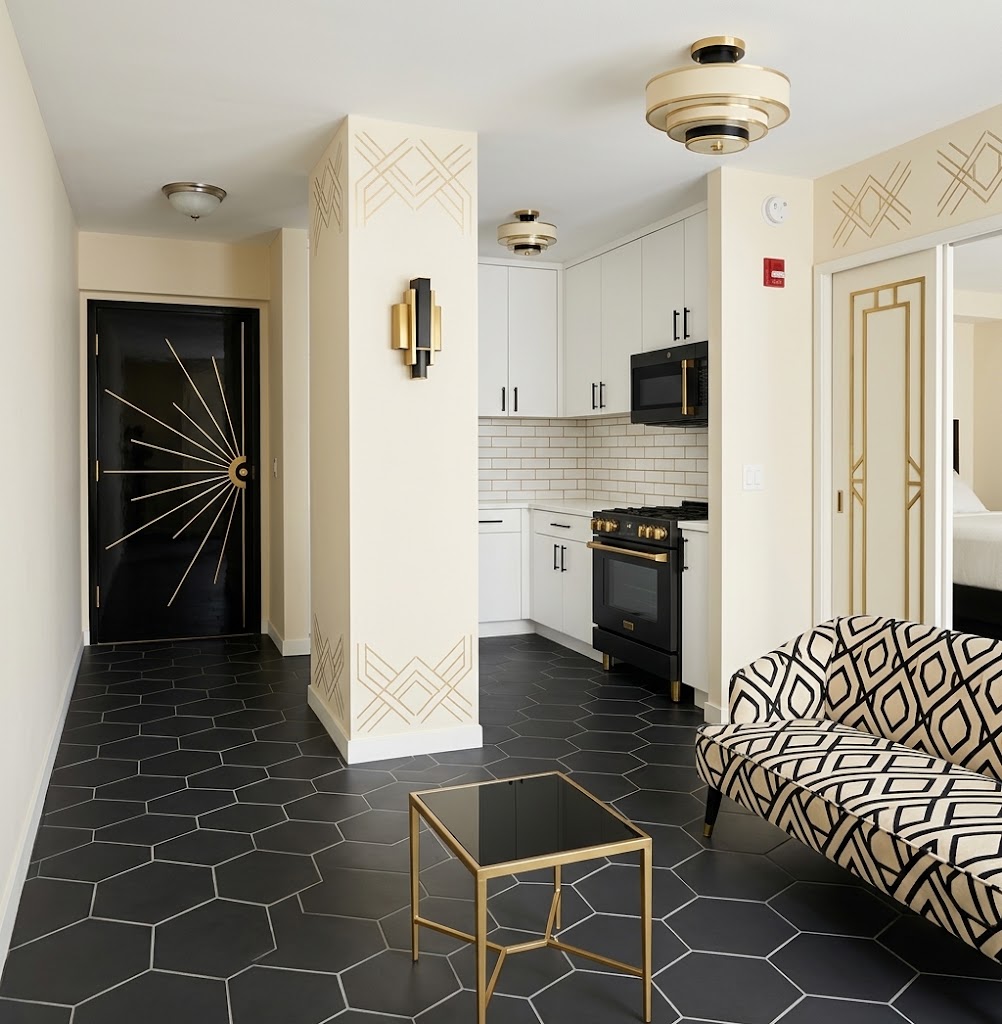
Proposed interior concept. The $35K–$60K renovation reserve exists to deliver exactly this. A space a traveling professional comes home to after a long shift and doesn’t want to leave. This is what turns a unit into a renewal.
THE ASSET Residential unit | Honolulu, HI Ultra-luxury finish | 29-day minimum tenancy Target tenant: Travel medical professional
THE STRUCTURE
| Capital Ask | Up to $325K |
| Acquisition | $290K or less (negotiation in progress) |
| Reno Reserve | $35K–$60K (ceiling, not floor) |
| Deployed Capital | Receipt-verified — any unspent reno budget seeds the operating reserve before participation begins |
| Split | Flat 80/20 in funder’s favor |
| Step-down | None. 80/20 the entire way through. |
| Structure | Revenue Participation Agreement — not a loan, not equity |
| Recourse | Zero personal recourse |
THE NUMBERS
Recovery timeline calculated on maximum capital deployment of $325K plus flat 10% return ($32,500), total funder obligation $357,500. Actual timeline accelerates if reno reserve is partially undeployed — unused funds seed the operating reserve before participation begins, reducing the time required to reach the operating reserve cap and accelerating the transition to full steady-state distributions.
| Baseline | Optimistic | |
|---|---|---|
| Gross Monthly | $5,000 | $6,000 |
| Less Carrying Costs | ($1,484) | ($1,484) |
| Less Tax Drag (GET + TAT) | ($899) | ($1,079) |
| Less Maintenance Reserve | ($400) | ($400) |
| Less Operating Reserve | ($1,484) | ($1,484) |
| Net Available (Accumulation) | $733 | $1,553 |
| Net Available (Post-Reserve Cap) | $2,217 | $3,037 |
A NOTE ON HAWAII TAXATION
GET and TAT obligations are factored into net monthly figures above. Final tax allocation between operator and funder will be confirmed and documented in the Revenue Participation Agreement prior to execution.
DISTRIBUTIONS
| Accumulation Phase | Post-Reserve Cap | |
|---|---|---|
| Funder 80% — Baseline (monthly) | $586 | $1,774 |
| Operator 20% — Baseline (monthly) | $147 | $443 |
| Funder 80% — Optimistic (monthly) | $1,242 | $2,430 |
| Operator 20% — Optimistic (monthly) | $311 | $607 |
RECOVERY TIMELINES
| Baseline | Optimistic | |
|---|---|---|
| Funder Recovery Target | $357,500 | $357,500 |
| Year 1 Recovery | $7,032 | $14,904 |
| Remaining After Year 1 | $350,468 | $342,596 |
| Monthly Rate (Post-Cap) | $1,774 | $2,430 |
| Months to Full Recovery | ~209 months | ~153 months |
| Estimated Full Recovery Timeline | ~17.4 years | ~12.75 years |
WHY THIS DEAL EXISTS – This isn’t a standalone acquisition. It’s the entry point into the Hale Hibiscus capital partner ecosystem. The operator runs an identical philosophy, structure, and standard of execution across every asset. This unit lets you see exactly how we operate — reporting, distributions, communication, asset condition — before you decide whether you want a seat at the flagship.
The funder who does this one first doesn’t just get a return. They get a front-row view of the operator before the big commitment.
MAINTENANCE RESERVE
A $400 per month maintenance reserve is deducted from net rental income prior to distribution and held in a dedicated reserve account. This reserve is capped at $4,800 annually. Once the cap is reached, the monthly $400 deduction ceases and full net income flows to the 80/20 split until the reserve is drawn down below the cap threshold — at which point monthly contributions resume until the cap is restored.
Reserve funds are used exclusively for asset maintenance, repair, and condition preservation — appliances, fixtures, systems, and structural elements within the unit. Any expenditure from the reserve exceeding $5,000 is documented and reported to the funder within 5 business days.
This reserve exists because even an entry-level asset should never face an emergency with $0 available. A water heater doesn’t care what the rent is. The reserve ensures it doesn’t come out of the operator’s cut or interrupt funder distributions.
Unused reserve funds at agreement termination are retained by the operator.
OPERATONG RESERVE
An operating reserve of $17,808 (twelve months of fixed carrying costs) is funded via monthly contribution of $1,484 taken prior to distribution. Once the target is reached, contributions pause and full net revenue enters the participation split. Contributions resume only if the reserve is drawn below threshold.
The operating reserve exists to ensure uninterrupted coverage of fixed carrying costs during vacancy periods, ownership transitions, or unforeseen revenue disruptions. It is held separately from the maintenance reserve and is not commingled with distribution funds.
Fixed carrying costs covered by this reserve include HOA dues, property taxes, and homeowner’s insurance.
Unused operating reserve funds at agreement termination are retained by the operator.
PET FEES
Pet fees are non-refundable and deposited directly into the maintenance reserve fund. They do not flow through the revenue participation split. Pet fees exist to offset pet-related wear and damage beyond standard turnover and are held within the reserve until drawn for documented pet-related expenses.
Given the extended tenancy model at Lunalilo Tower — with minimum stay agreements of 90 days or longer — pet fees reflect the elevated wear profile of a long-term occupancy with an animal in residence. A single pet fee is collected per tenancy agreement, not per month. The $4,800 annual cap applies only to the standard $400 monthly contribution. Pet fees are additive to this structure and do not reset or replace the standard reserve contribution. Any unused pet fee balance at agreement termination is retained by the operator.
Pet fee structure to be confirmed in consultation with a Hawaii real estate attorney prior to contract execution.
OPERATOR COMMITMENTS
- Monthly reporting within 5 business days of close
- Monthly distributions within 10 business days
- 24-hour response for urgent maintenance
- 5-business-day notice for any vacancy anticipated to exceed 30 days
- Ultra-luxury asset condition maintained at all times
- Audit rights with 10 business days notice
Entry Opportunity
The entry unit exists because not every capital partner is ready to wire seven figures on a first conversation. That’s not a hesitation problem. That’s discernment. And Hale Hibiscus was built by someone who respects discernment.
This acquisition is a residential unit in Honolulu, Hawaii — finished to ultra-luxury standard, tenanted exclusively to travel medical professionals on 29-day minimums, and structured under the same Revenue Participation Agreement framework that governs every Hale Hibiscus asset. Same operator. Same philosophy. Same commitment to receipts-backed deployment, transparent reporting, and distributions that arrive on time.
The capital ask is up to $325K — covering acquisition at or below $290K and a reno reserve with a ceiling, not a floor. What isn’t spent comes back to you before participation begins. Your recovery base shrinks. Your timeline accelerates. That’s not a pitch line. That’s how the structure actually works, and it’s written into the agreement.
The split is flat 80/20 in your favor. No step-downs. No percentages that shift as recovery approaches. You know your number on day one and it stays your number until you’re whole. At baseline projections, that’s approximately $2,100 to $2,750 per month landing in your account while the operator handles everything.
But here’s what the numbers don’t capture. The funder who does this deal first gets something the numbers can’t quantify. They get to watch. They see how the operator communicates when something breaks. They see whether distributions arrive when promised. They see whether the reporting is clean or whether there are surprises. They get proof of concept before the flagship conversation ever begins — and when that conversation happens, they’re not evaluating a stranger. They’re evaluating a track record they witnessed firsthand.
This is not the biggest opportunity in the Hale Hibiscus portfolio. It is deliberately the smallest. It was designed that way. Because the operator understands that trust is built in sequence, and the most elegant thing she could offer a cautious capital partner isn’t a bigger return. It’s a smaller first step.
FAQs –
“I’ve never done a revenue participation agreement before.”
Most people haven’t — it’s not a common structure outside of institutional real estate. But the concept is straightforward. You’re not a lender, so there’s no debt instrument. You’re not an equity partner, so there’s no ownership complexity. You participate in a defined percentage of net rental income until your capital is recovered. Clean in, clean out. No personal recourse, no ongoing liability, no board seat. You’re a revenue participant, not a co-owner.
What if the unit sits vacant?
Two things. First, the travel medical professional tenant profile is specifically chosen for stability — these are placed professionals on assignment contracts, not discretionary renters who cancel when things get tight. Essential workers don’t stop being essential.
Second, the RPA is structured on net rental income, so if the unit is vacant there’s no distribution — I’m not drawing from reserves to pay you a fake return. What you see is what’s actually happening. The operating reserve exists precisely for this scenario — fixed carrying costs like HOA, property taxes, insurance, and utilities continue to be covered without touching funder capital or fabricating numbers. I’d rather have that conversation transparently than paper over a vacancy with smoke.
“How do I know you’ll actually operate the way you say?”
You don’t. Not yet. That’s exactly why this deal exists at this size. You put in a number that doesn’t keep you up at night, you watch how I operate for the first year — reporting, distributions, communication, asset condition — and then you decide whether you want to be in the flagship conversation. I’m not asking you to trust me on seven figures. I’m asking you to trust me on one unit first. The structure was designed that way deliberately.
“What’s your exit if this doesn’t work?”
Three paths. You recover your full capital through distributions and the RPA terminates — you’re whole, I keep the asset free and clear.
- If I sell the asset before you’re fully recovered, you’re made whole from proceeds before I see a dollar of gain.
- Or if I refinance, same thing — outstanding balance retires before I benefit.
- Every exit path makes you whole first. That’s not negotiable and it’s written into the agreement.
“Why not just get a traditional mortgage?”
I could. But a traditional mortgage puts debt service ahead of everything — including operator flexibility and asset quality. The RPA structure means my obligation to you is tied directly to the asset’s performance. We’re aligned. If the asset performs well, you recover faster. If it underperforms, I’m not extracting from a debt obligation that doesn’t care how the unit is doing. The structure keeps us on the same side of the table.
If you’re the kind of person who wants to understand how someone operates before you commit at scale — this deal was structured for you.
This page is a private, confidential summary for qualified capital consideration only. Not a securities offering. Full legal documentation prepared by counsel prior to closing.